BPH Energy (BPH:AU) has announced Trading Halt
Download the PDF here.
This post appeared first on investingnews.com


BPH Energy (BPH:AU) has announced Trading Halt
Download the PDF here.

E-Power Resources offers investors high-grade exposure to the rapidly expanding flake graphite sector through one of Québec’s most promising districts. With a strategic land position, near-surface discoveries, and a leadership team experienced in exploration and capital markets, E-Power is positioned to help supply North America’s critical battery materials chain.
E-Power Resources (CSE:EPR) is a Montréal-based company focused on advancing its flagship Tetepisca graphite property in Québec’s North Shore region. The company’s mission is to delineate and develop a high-grade, near-surface flake-graphite resource capable of supplying future North American battery-anode demand.
Since entering the Tetepisca district in 2019, E-Power has systematically advanced its project from regional geophysics to mapping, sampling, drilling and metallurgical testing. This disciplined exploration pipeline has confirmed the presence of district-scale, high-purity graphite mineralization within the same geological sequence that hosts neighboring deposits such as Focus Graphite’s Lac Tetepisca and Nouveau Monde Graphite’s Uatnan, which together hold more than 120 million tons (Mt) measured + indicated at approximately 14 percent Cg.
Graphite demand is accelerating globally as electric-vehicle production and energy-storage capacity expand. Québec’s hydroelectric grid, pro-mining policy environment, and rapidly developing anode-manufacturing infrastructure make it a world-class jurisdiction for low-carbon graphite development. Within this setting, E-Power’s land position, grade profile and technical results uniquely position the company to become a core participant in Canada’s graphite-to-battery supply chain.
The Tetepisca graphite property is approximately 220 km north of Baie-Comeau, covering 234 contiguous claims (~12,840 ha) in the heart of the Tetepisca Graphite District (TGD). The property is 100-percent-owned by E-Power and hosts the same graphitic metasedimentary units that define the district’s producing and feasibility-stage assets.
The TGD is an emerging flake-graphite camp that now hosts more than 120 Mt of measured and indicated resources averaging ~14 percent Cg across nearby projects such as Nouveau Monde Graphite’s Uatnan and Focus Graphite’s Lac Tetepisca deposits.
E-Power controls the largest contiguous land position in the district, strategically covering the same graphitic metasedimentary horizons that host these deposits. The district’s proximity to the planned 200,000 tpy graphite-anode facility in Baie-Comeau creates a unique alignment of resource, infrastructure and processing capability, positioning E-Power as a potential key upstream feed source for Québec’s integrated graphite-to-anode supply chain.
E-Power’s work since 2021 has validated the property’s high-grade, near-surface potential.
E-Power’s 2025–2026 work program will focus on advancing the Tetepisca property toward an initial resource estimate. Key activities include expanded fieldwork and metallurgical testing at the Graphi-Centre, Captain Cosmos and Syndicate showings; follow-up ground and drone-borne geophysical surveys to refine drill targets; and a focused drilling campaign designed to define near-surface, high-grade graphite zones. In parallel, the company is initiating early environmental baseline and access studies to support future development and potential partnerships within Québec’s growing graphite-to-anode supply chain.
Jean-Michel Gauthier contributes significant expertise in capital markets, corporate development and strategic positioning within the resource sector. His focus will be on ensuring the optimal deployment of capital and maximizing the inherent value of the Tetepisca Project as it advances through key de-risking stages.
Mark Billings is a highly respected finance professional in the Canadian resource sector, bringing extensive investment banking and corporate finance experience. His prior roles, including VP corporate finance at Desjardins Securities, provide a crucial foundation for guiding E-Power’s capital formation and strategic financing plans necessary for the Tetepisca Project’s development phases.
Jamie Lavigne is a professional economic geologist with over 30 years of experience in exploration and mine development. He has worked with major Canadian and Australian mining companies and several junior explorers and operates his own consulting firm. Lavigne holds a B.Sc. from Memorial University and an MSc. from the University of Ottawa. He is a member of L’Ordre des Géologues du Québec and the Northwest Territories and Nunavut Association of Professional Engineers and Geoscientists.
Paul Haber brings over 20 years of experience in corporate finance and capital markets. He has served as CFO, board member, and audit chair for numerous public and private companies, including XTM (CSE:PAID), South American Silver (TSX:SAC), and Migao Corporation (TSX:MGO). A CPA and CA, Haber began his career at Coopers & Lybrand and holds an Honours B.A. in Management from the University of Toronto. He also holds a Chartered Director designation from the DeGroote School of Business and the Conference Board of Canada.

Discoveries made by companies in the genetics sector help support every other life science industry in a variety of ways.
One of the genetic sector’s major contributions is the discovery of new genetic drivers of diseases. Genetic testing has grown substantially over the last few years, thanks to advances in technology; growth has also been spurred by an increase in chronic diseases and the continuing development of test kits for therapeutic areas with unmet medical needs.
Gene therapy is also a huge driver of growth in the overarching genetics market. This important segment of the life science market is focused on how genes can help treat or prevent serious conditions in patients. This includes the potential for healthcare professionals to implement gene therapy at the cellular level instead of using medication or surgery, replacing ‘faulty’ genes with new ones to potentially cure diseases.
Pharma and biotech companies often dabble in genetics along with their core disciplines, meaning that some firms may also have operations in other areas.
The top NASDAQ genetics stocks listed below have products related to gene therapy, genetic testing, genetically defined cancers and rare genetic diseases.
Data for this list of genetics stocks on the NASDAQ was collected on December 31, 2025, using TradingView’s stock screener, and stocks with market caps above US$50 million were considered.
Year-over-year gain: 143.8 percent
Market cap: US$10.87 billion
Share price: US$72.14
Avidity Bioscience is a biopharma firm developing a new form of RNA therapy called antibody oligonucleotide conjugates (AOC) that target the genes causing rare muscle diseases.
Through its proprietary AOC platform, Avidity developed programs for three rare muscle diseases: AOC 1001 for myotonic dystrophy type 1, AOC 1044 for Duchenne muscular dystrophy and AOC 1020 for facioscapulohumeral muscular dystrophy. The company is also working to expand its pipeline into cardiology and immunology.
In October 2025, Avidity entered into a definitive agreement to be acquired by Novartis (NYSE:NVS), which will include the company’s late-stage neuromuscular programs (AOC 1001, 1020, 1044) and the AOC platform, for US$12 billion.
Avidity’s early-stage precision cardiology programs will spin off into a new public company prior to closing in H1 2026. The spin-off will also have rights to use and develop the AOC platform for cardiology applications.
Year-over-year gain: 36.52 percent
Market cap: US$3.13 billion
Share price: US$17.12
Wave Life Sciences is another clinical-stage firm focused on unlocking insights from human genetics to deliver RNA-based medicines. The company’s PRISM platform is targeting both rare and prevalent disorders. Its pipeline includes clinical programs for Duchenne muscular dystrophy, alpha-1 antitrypsin deficiency and Huntington’s disease, as well as a preclinical program for WVE-007 in obesity.
Wave Life Sciences advanced its PRISM RNA platform across multiple programs in 2025. It is also performing a Phase 1 trial testing its WVE-007 obesity candidate, which is an investigational INHBE GalNAc-siRNA using Wave’s proprietary SpiNA design.
In December, the company reported positive interim data from the WVE-007 trial, which showed that a single dose resulted in sustained Activin E reduction, supporting infrequent dosing. Target engagement updates and body composition readouts are planned for Q1 2026.
Year-over-year gain: 33.15 percent
Market cap: US$1.47 billion
Share price: US$23.86
UniQure is a gene therapy company focused on patients with severe medical needs. In November 2022, the US Food and Drug Administration (FDA) approved the company’s gene therapy Hemgenix (etranacogene dezaparvovec), which is the world’s first gene therapy for hemophilia B.
Today, uniQure’s proprietary gene therapy pipeline includes treatments for patients with Huntington’s disease, refractory temporal lobe epilepsy, ALS and Fabry disease.
Its gene therapy pipeline advanced in 2025, with positive Phase I/II topline data for Huntington’s disease candidate AMT-130 showing 75 percent slowing of disease progression at three years via cUHDRS, alongside 60 percent functional capacity preservation.
While data from the Phase I/II study led the FDA to grant AMT-130 breakthrough therapy designation in April, in December the agency told UniQure it believes the data may not be adequate to support a pre-biologics license application under the accelerated approval pathway. The company is pursuing a follow-up meeting.
Year-over-year gain: 186.96 percent
Market cap: US$1.81 billion
Share price: US$31.74
Stoke Therapeutics is another biotech company with a focus on developing RNA medicine. With its proprietary research platform TANGO, which stands for targeted augmentation of nuclear gene output, the company is developing antisense oligonucleotides to selectively restore protein levels.
Stoke’s first product candidate, zorevunersen (STK-001), is in clinical testing for the treatment of Dravet syndrome, a severe form of genetic epilepsy. The company is also developing STK-002 for the treatment of autosomal dominant optic atrophy, an inherited optic nerve disorder.
Both candidates advanced in 2025, with STK-001 enrolling patients in Phase 3 after positive long-term data showed seizure reductions and cognitive gains. Likewise, STK-002’s clinical development program is being informed by results, presented in October, of a Phase 1 two year natural history study on the disease progression of autosomal dominant optic atrophy.
Securities Disclosure: I, Meagen Seatter, hold no direct investment interest in any company mentioned in this article.

The copper price climbed to a fresh record on Tuesday (January 6), with persistent supply disruptions and trade uncertainty pushing the metal to a nearly 30 percent rally since October.
Benchmark three month copper on the London Metal Exchange (LME) rose as much as 3.1 percent in early trading to an all‑time high of US$13,387.50 per metric ton before settling slightly lower, but still above US$13,200.
The jump marks another milestone in a rally that first saw copper breach US$12,000 late in December last year.
Copper is widely used across the industrial economy, from construction and power infrastructure to electric vehicles and data centers that support artificial intelligence growth. Analysts attribute the gains to a combination of production setbacks at major mines and heightened concerns that prospective US trade tariffs could further disrupt flows.
Large copper-mining operations such as Freeport-McMoRan’s (NYSE:FCX) Grasberg complex in Indonesia have faced challenges since last year, while a strike at Capstone Copper’s (TSX:CS,ASX:CSC,OTC Pink:CSCCF) Mantoverde mine in Chile has reduced output prospects in one of the world’s top copper‑producing nations.
The threat of new tariffs under the Trump administration has also shaped expectations. Traders have moved to ship refined copper into the US ahead of any potential levies, tightening supply elsewhere. Furthermore, data show copper stocks in Comex warehouses have jumped to more than 450,000 metric tons, well above last year’s levels.
Market watchers expect many of the forces that drove copper through 2025 to persist.
Supply constraints are expected to remain acute this year as aging mines and capacity shortfalls weigh on availability. New projects such as Arizona Sonoran Copper Company’s (TSX:ASCU,OTCQX:ASCUF) Cactus project and the long‑anticipated Resolution mine in the US are still years from significant output.
Copper demand is projected to grow as the global energy transition accelerates.
“A huge amount of this tightness has to do with US tariff concerns,” she said.
China, the world’s largest copper consumer, is also shaping the outlook. Despite weakness in its property sector, the country posted economic growth and is expected to prioritize copper‑intensive sectors under its new five year plan.
Longer‑term projections from industry groups suggest structural demand growth will outpace supply additions.
A UN report estimates that copper demand could rise 40 percent by 2040, requiring substantial investment and new mines just to keep pace. Likewise, Wood Mackenzie forecasts that copper demand will increase 24 percent by 2035, while the International Copper Study Group predicts a refined copper deficit of 150,000 metric tons in 2026 alone.
Securities Disclosure: I, Giann Liguid, hold no direct investment interest in any company mentioned in this article.

Alain Corbani, head of mining at Montbleu Finance and manager of the Global Gold and Precious Fund, sees the gold price reaching US$5,000 per ounce in the near term.
He sees real interest rates and the US dollar as the key factors to watch, but noted that other elements are also adding tailwinds.
Securities Disclosure: I, Charlotte McLeod, hold no direct investment interest in any company mentioned in this article.

The S&P 500 ($SPX) just logged its fifth straight trading box breakout, which means that, of the five trading ranges the index has experienced since the April lows, all have been resolved to the upside.
How much longer can this last? That’s been the biggest question since the massive April 9 rally. Instead of assuming the market is due to roll over, it’s been more productive to track price action and watch for potential changes along the way. So far, drawdowns have been minimal, and breakouts keep occurring. Nothing in the price action hints at a lasting change — yet.
While some are calling this rally “historic,” we have a recent precedent. Recall that from late 2023 through early 2024, the index had a strong start and gave way to a consistent, steady trend.
From late October 2023 through March 2024, the S&P 500 logged seven consecutive trading box breakouts. That streak finally paused with a pullback from late March to early April, which, as we now know, was only a temporary hiccup. Once the bid returned, the S&P 500 went right back to carving new boxes and climbing higher.
If there’s been one gripe about this rally, it’s that the number of new highs within the index has lagged. As we’ve discussed before, among all the internal breadth indicators available, new highs almost always lag — that’s normal. What we really want to see is whether the number of new highs begins to exceed prior peaks as the market continues to rise, which it has, as shown by the blue line in the chart below.
As of Wednesday’s close, 100 S&P 500 stocks were either at new 52-week highs or within 3% of them. That’s a strong base. We expect this number to continue rising as the market climbs, especially if positive earnings reactions persist across sectors.
Even when we get that first day with 100+ S&P 500 stocks making new 52-week highs, though, it might not be the best time to initiate new longs.
The above chart shows that much needs to align for that many stocks to peak in unison, which has historically led to at least a short-term consolidation, if not deeper pullbacks — as highlighted in yellow. Every time is different, of course, but this is something to keep an eye on in the coming weeks.
The GoNoGo Trend remains in bullish mode, with the recent countertrend signals having yet to trigger a greater pullback.
We still have two live bullish upside targets of 6,555 and 6,745, which could be with us for a while going forward. For the S&P 500 to get there, it will need to form new, smaller versions of the trading boxes.
In the chart below, you can view a rising wedge pattern on the recent price action, the third since April. The prior two wedges broke down briefly and did not lead to a major downturn. The largest pullbacks in each case occurred after the S&P 500 dipped below the lower trendline of the pattern.
The deepest drawdown so far is 3.5%, which is not exactly a game-changer. Without downside follow-through, a classic bearish pattern simply can’t be formed, let alone be broken down from.
We’ll continue to monitor these formations as they develop because, at some point, that will change.

President Donald Trump has adopted an interventionist posture to justify toppling dictator Nicolás Maduro’s regime in Venezuela and has signaled he’ll take the same approach with other Latin American countries next as his administration seeks to assert dominance in the Western Hemisphere.
Interventionism is a foreign policy approach by which one country intervenes in another state’s affairs. The U.S. has engaged in several interventions abroad, including launching an invasion of Iraq in 2003 that led to the toppling of Iraqi dictator Saddam Hussein’s regime.
While Trump has blasted previous administrations for actions in the Middle East and vowed he would bring an end to ‘endless wars’ while ushering in an ‘America First’ agenda prioritizing U.S. interests, Trump signed off on conducting a ‘large scale strike’ against Venezuela and capturing Maduro Saturday, prompting concern, primarily from Democrats, about starting another lengthy conflict.
The strikes in Venezuela come on the heels of several other major military operations from the Trump administration, including strikes in Nigeria on Christmas Day against Islamic State militants in response to attacks against Christians in the region, strikes in Syria in December against Islamic State operatives after an ambush against U.S. troops there, and strikes in June against the Iranian nuclear sites of Fordow, Natanz and Isfahan.
But unlike the strikes in the Middle East, the operations in Venezuela require additional U.S. involvement. Trump said Sunday that the U.S. will run Caracas, Venezuela, until a safe transition can occur, thrusting the U.S. into the most significant military intervention of Trump’s presidencies as he wages a campaign to ‘reassert American dominance in the Western Hemisphere.’
‘Trump has never been an advocate of regime change, but that is what he has on his hands now. Unlike the Fordow strikes, where Trump acted and then said, ‘The fight is over,’ he will not have that luxury here in Venezuela,’ retired Rear Adm. Mark Montgomery, now a senior fellow with the Foundation for the Defense of Democracies, said in a statement Saturday.
Most Republicans have backed Trump’s actions in Venezuela, although some from the more anti-interventionist camp of the GOP have voiced skepticism, including outgoing Rep. Marjorie Taylor Greene, R-Ga., who said in a social media post Saturday, ‘This is what many in MAGA thought they voted to end.’
Meanwhile, Democrats have issued caution that the U.S. may be entangling itself in another complicated conflict. For example, Senate Minority Leader Chuck Schumer, D-N.Y., claimed that the U.S. is on the path to another ‘endless war.’
‘The American people are worried that this is creating an endless war,’ Schumer said in an interview with ABC News Sunday. ‘The very thing that Donald Trump campaigned against over and over and over again was no more endless wars. And, right now, we’re headed right into one with no barriers, with no discussion.’
Trump announced Saturday that U.S. special forces conducted a strike against Caracas, Venezuela, and seized Maduro and his wife, Cilia Flores. The two were taken to New York and appeared in a Manhattan federal court on Monday on drug charges. Both pleaded not guilty.
In addition to running Venezuela, Trump said the U.S. was ‘ready to stage a second and much larger attack’ if needed in Caracas. Likewise, he signaled Sunday that other Latin American countries could also face regime change, singling out Cuba and issuing a word of caution to Colombia’s president, Gustavo Petro.
‘Cuba only survives because of Venezuela,’ Trump said.
‘Colombia is very sick too — run by a sick man who likes making cocaine and sending it to the United States, and he’s not going to be doing it very long,’ Trump said.
Trump’s words and actions come as he’s revived the Monroe Doctrine, rebranded as the ‘Don-roe Doctrine,’ that originally sought to limit European influence in Latin America and to protect U.S. influence in the region.
The Monroe Doctrine, first introduced in 1823 by President James Monroe, specifically cautioned European nations against further colonization in Central and South America. Later, it was used to justify U.S. actions in the region as an ‘international police power’ under former President Theodore Roosevelt, according to the National Archives.
‘The Monroe Doctrine is a big deal. But we’ve superseded it by a lot, by a lot,’ Trump said Saturday. ‘They now call it the ‘Don-roe Doctrine.’ … We sort of forgot about it. It was very important, but we forgot about it. We don’t forget about it anymore. Under our new national security strategy, American dominance in the Western Hemisphere will never be questioned again.’
Katherine Thompson, a senior fellow in defense and foreign policy studies at the libertarian think tank the Cato Institute, told Fox News Digital Tuesday it’s too early to tell if Trump’s future approach to the Western Hemisphere will include more interventionist activity.
However, she said the ‘expansive’ definition of what America’s core interests are ‘opens the administration up to risk of strategic drift away from the ‘America First’ framework, diminishes the principle of prioritization and allows greater tolerance for an interventionist approach.’
So far, Trump has claimed his actions in Venezuela are complementary to his ‘America First’ priorities because he wants the U.S. to have ‘good neighbors.’
Retired Vice Adm. Robert Harward, a Jewish Institute for National Security of America (JINSA) 2022 General and Admirals Program participant and a member of JINSA’s Iran Policy Project, said Trump’s actions in Venezuela are on the same page as the president’s ‘America First’ agenda.
That means holding other nations who mistreat their people accountable for their own benefit and for the benefit of the American people, he said.
‘They’re clearly aligned. This is exactly what he’s talked about. … This is an accountability for them,’ Harward said.
For those concerned about the U.S. military’s actions in Venezuela, Vice President JD Vance has attempted to soothe their fears. Vance leans toward the non-interventionist wing of the Trump administration and historically has backed a foreign policy doctrine that supports minimal interference with other nations’ affairs.
‘I understand the anxiety over the use of military force, but are we just supposed to allow a communist to steal our stuff in our hemisphere and do nothing?’ Vance said in a social media post Sunday. ‘Great powers don’t act like that.’
Secretary of State Marco Rubio claimed the U.S. did not require approval from Congress to conduct the strike since it wasn’t an ‘invasion’ and claimed actions in Caracas, Venezuela, were part of a ‘law enforcement function to capture a drug trafficker.’
The Trump administration repeatedly stated that it did not recognize Maduro as a legitimate head of state and insisted he was the leader of a drug cartel.
But lawmakers, especially Democrats, have called into question the legality of the operation in Venezuela, which was conducted without Congress’ approval.
‘This has been a profound constitutional failure,’ the top Democrat on the Senate Armed Services Committee, Sen. Jack Reed, D-R.I., said in a statement Saturday. ‘Congress — not the President — has the sole power to authorize war. Pursuing regime change without the consent of the American people is a reckless overreach and an abuse of power.
‘The question now is not whether Maduro deserved removal — it is what precedent the United States has just set, and what comes next.’
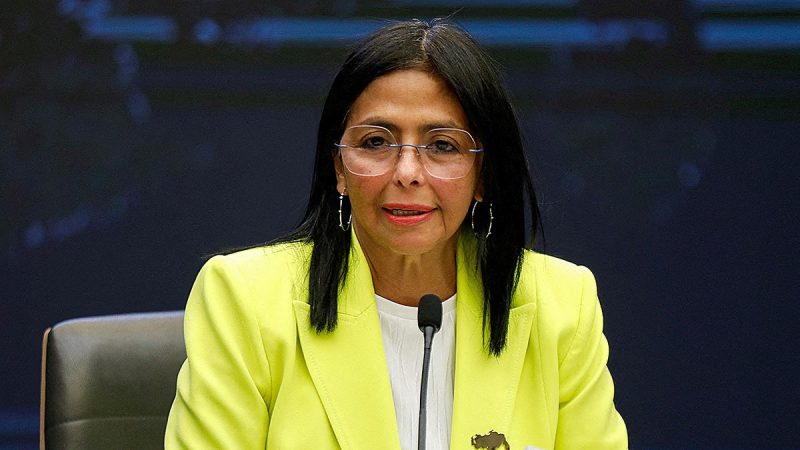
When Nicolás Maduro was removed from power by the United States, many in Washington expected the U.S. to rally behind Venezuela’s most prominent opposition leader.
Instead, the Trump administration moved to engage a longtime Maduro loyalist, signaling a transition strategy driven less by democratic symbolism than by concerns over stability on the ground.
The approach sidelined María Corina Machado, the opposition leader who claims the strongest popular mandate and international profile, while elevating Delcy Rodríguez, Maduro’s vice president and a central figure in the outgoing regime.
Administration officials and outside analysts say the shift reflects a calculated effort to avoid a power vacuum and maintain control during a fragile transition, even as it complicates Washington’s longstanding support for Venezuela’s democratic opposition.
And President Donald Trump is betting Rodríguez now lives in fear of what might happen to her if she defies the U.S.
Trump, describing his phone call with Rodríguez, said she offered: ‘We’ll do whatever you need.’
‘I think she was quite gracious,’ he said.
But in a separate interview with The Atlantic he warned: ‘If she doesn’t do what’s right, she is going to pay a very big price, probably bigger than Maduro.’
Following Maduro’s removal, Delcy Rodríguez was sworn in as Venezuela’s interim president after the Supreme Court ruled she should assume power in his absence.
Under Venezuela’s constitution, the vice president can serve on an interim basis while the country determines whether and when new elections will be held. While the constitution generally calls for elections within 30 days if a president is permanently unable to serve, authorities have so far described Maduro’s removal as temporary, allowing Rodríguez to remain in office as the timeline for a political transition is debated.
A classified CIA intelligence assessment examined who would be best positioned to lead a temporary government in Caracas, Venezuela, and maintain short-term stability, a source familiar with the intelligence told Fox News Digital. The report, requested by senior policymakers and presented to Trump, aimed to offer the president ‘comprehensive and objective analysis’ on possible scenarios after Maduro’s capture.
A source familiar with the assessment told Fox News Digital that the assessment attempted to analyze the domestic situation in Venezuela, but did not describe how Maduro could lose power or advocate for his removal.
Trump senior policymakers requested the assessment — specifically one that addressed who would be best able to stabilize Venezuela ‘immediately’ following a Maduro removal.
‘There was sentiment among senior officials that Machado lacked the necessary support in Venezuela if Maduro was to be removed,’ the source familiar told Fox News Digital.
One of the reasons for that, the source told Fox News Digital, was because Machado was not in Venezuela, though she has vowed to return.
The report found Rodríguez would be best positioned to lead a temporary government in Caracas, Venezuela, and Gonzalez and Machado would struggle to gain support from security services.
While Machado has been widely embraced by Western governments and democracy advocates, U.S. officials and analysts say that support has not translated into leverage over Venezuela’s military or security services.
Trump’s skepticism also has been shaped by frustration from his first term, when international backing and opposition momentum failed to produce a transfer of power.
‘Machado has an inherent problem from the get-go,’ said Pedro Garmendia, a Venezuela expert and Washington-based geopolitical risk analyst. ‘She doesn’t control troops or hold any sort of power in Venezuela.’
At the same time, ‘Rodríguez is an ideologue,’ he said. ‘In the long term, the Trump administration might find itself having trouble reining her in.’
Trump has been more blunt in explaining why the administration has not rallied behind Machado. Speaking after the operation that removed Maduro from power, Trump questioned whether she could lead Venezuela in a transition, saying she lacked sufficient support inside the country.
‘I think it would be very tough for her to be the leader,’ Trump said. ‘She doesn’t have the support within or the respect within the country.’
A Washington Post report had claimed that Trump was upset Machado accepted this year’s Nobel Peace Prize — an award he coveted and that she dedicated to him. But the White House insisted Trump’s actions were the result of internal briefings.
‘President Trump is routinely briefed on domestic political dynamics all over the world. The President and his national security team are making realistic decisions to finally ensure Venezuela aligns with the interests of the United States, and becomes a better country for the Venezuelan people,’ said White House press secretary Karoline Leavitt.
Rubio has sought to frame the decision as mission-driven rather than personal, pointing to past U.S. interventions as cautionary examples.
‘I have tremendous admiration for María Corina Machado. I have admiration for Edmundo,’ Rubio said Sunday on CBS’ ‘Face the Nation.’ ‘But there’s the mission that we are on right now. … A lot of people analyze everything that happens in foreign policy through the lens of Iraq, Libya, or Afghanistan. This is not the Middle East. This is the Western Hemisphere, and our mission here is very different.’
The administration’s caution also is shaped by a long history of U.S. intervention in Latin America, where American-backed coups and political engineering have left deep skepticism toward Washington’s motives. Installing an opposition leader immediately after a U.S. military operation, analysts warn, could revive those suspicions and undermine any transition before it begins.
‘If they were to bring María Machado and presumably Edmundo González back to the country and install them as president, it would look a lot like the United States installing a new president,’ said Eric O’Neill, a former FBI counterintelligence operative. ‘That would actually cause civil unrest.’
‘Venezuelans are proud people, and they need to elect their next president,’ O’Neill added.
But Garmendia said Rodríguez is ‘just as illegitimate as Maduro was — and probably even less popular.’
He said Rodríguez lacks the charisma and mass appeal that traditionally have sustained Venezuela’s ruling movement, and that her authority rests largely on internal bargaining and elite control rather than public support.
In the interim, locals have reports of armed gangs patrolling the streets. Venezuelan authorities have detained at least 14 journalists since Maduro’s capture, according to the union representing Venezuelan reporters.
‘There’s going to be a lot of instability in the next couple of weeks,’ Garmendia said.
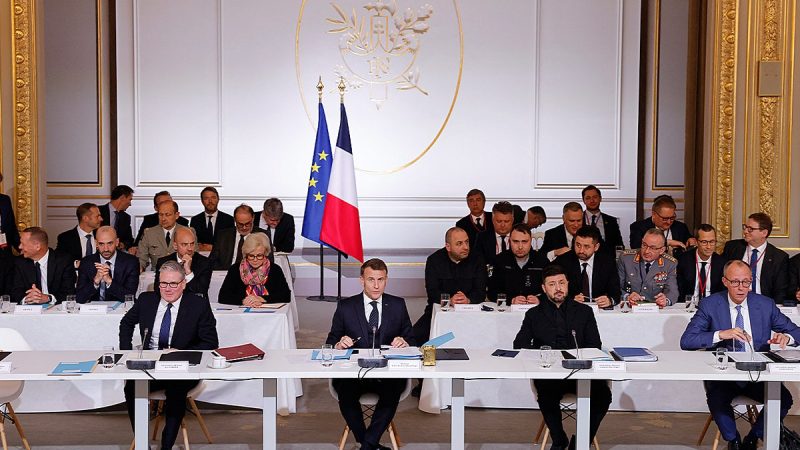
The U.K. and France signed a declaration Tuesday pledging troops for Ukraine under a future peace deal and with security guarantees supported by the U.S. and allied partners.
The declaration was adopted in Paris by the Coalition of the Willing and sets out what leaders said was a framework for lasting peace between Ukraine and Russia, set in international law and the principles of the United Nations Charter.
Russia’s full-scale invasion of Ukraine in 2022, triggered Europe’s largest conflict since World War II.
The new agreement says that Ukraine’s sovereignty and its ability to defend itself are non-negotiable elements of any peace deal and warned that its self-defense is essential to its own security and wider Euro-Atlantic stability.
Under the plan, a multinational force for Ukraine would be deployed once a ceasefire is in place, aimed at deterring any Russian aggression and supporting the rebuilding of Ukraine’s military.
The force would be European-led with proposed support from the U.S.
The declaration also commits the Coalition to security guarantees that would be activated once a ceasefire begins.
These include commitments to support Ukraine militarily, diplomatically and economically in the event of a future armed attack by Russia.
A key U.S. role is outlined in plans for a continuous, U.S.-led ceasefire monitoring and verification mechanism, with contributions from partners.
The U.S. would participate in a special commission to manage ceasefire breaches, attribute responsibility and determine solutions.
Coalition members also agreed to carry on with long-term military support for Ukraine and pledged defense cooperation, including training, defense production and intelligence sharing.
Leaders also announced the creation of a permanent U.S.-Ukraine-Coalition coordination cell based at the Coalition’s headquarters in Paris.
The declaration was unveiled at a joint news conference by French President Emmanuel Macron, Ukrainian President Volodymyr Zelenskyy and U.K. Prime Minister Keir Starmer.
This followed talks in Paris which were attended by Jared Kushner and the U.S. special envoy, Steve Witkoff.
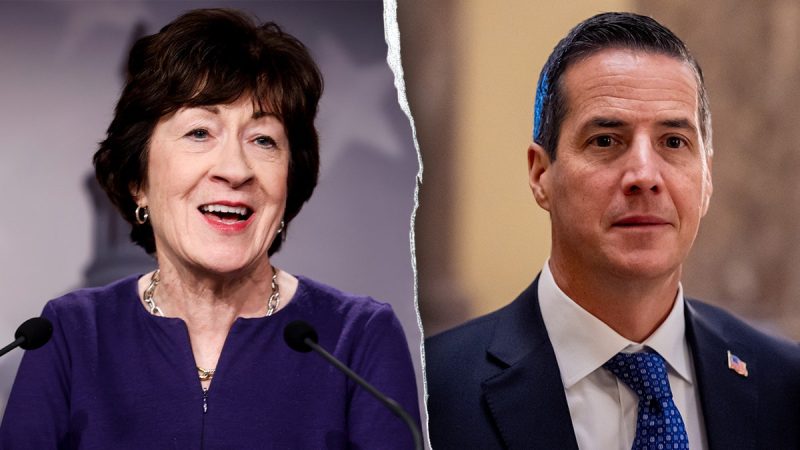
A bipartisan group of senators is still working on a fix for the now-expired Obamacare subsidies and believe that they may be nearing a proposal that could hit the Senate floor.
The confab, which met a handful of times during Congress’ holiday break, adjourned once more behind closed doors on Monday night. Sens. Susan Collins, R-Maine, and Bernie Moreno, R-Ohio, are leading the talks among several Senate Republicans and Democrats looking for a compromise solution.
Most who attended the meeting were tight-lipped on specifics of the still-simmering proposal, but Collins noted the plan was similar to the initial offering from her and Moreno.
‘Parts of the bill are similar to what Senator Moreno and I proposed originally, with a two-year extension, with some reforms in the first year and then more substantial reforms in the second year,’ she said.
Their original plan — one of several floating around in the upper chamber — would have extended the subsidies by two years, put an income cap onto the credits for households making up to $200,000 and eliminated zero-cost premiums as a fraud preventive measure by requiring a $25 minimum monthly payment.
Sen. Tim Kaine, D-Va., one of the lawmakers who has routinely attended the meetings, said the talks were going well.
‘We had a really good discussion last night,’ Kaine said. ‘I don’t want to characterize it other than we had a really good discussion.’
And Senate Majority Leader John Thune, R-S.D., said that he had gotten an update on negotiations from Moreno Tuesday morning and believed that the bipartisan huddles had been productive.
Still, any plan that hits the floor has to hit several benchmarks for Republicans, including antifraud guardrails, a transition into health savings accounts (HSAs) and more stringent anti-abortion language.
‘The keys are reforms, obviously, and then how do you navigate [the Hyde Amendment],’ Thune said. ‘I think that’s probably the most challenging part of this. But again, I think there’s potentially a path forward, but it’s something that has to get a big vote, certainly a big vote.’
The Hyde Amendment issue is a barrier for both sides of the aisle, given that Senate Republicans demand that changes be made to the subsidies, and more broadly Obamacare, to prevent any taxpayer dollars from funding abortions.
That debate received a wrinkle Tuesday when President Donald Trump told House Republicans ‘you have to be a little flexible’ when it comes to the Hyde Amendment.
That triggered mixed reactions from Republicans in the upper chamber.
Sen. James Lankford, R-Okla., said that he had ‘no idea the context’ of Trump’s remarks but affirmed that he was ardently against funding abortions.
‘I’m saying I’m not flexible in the value of human life,’ Lankford said. ‘Life is valuable. I don’t believe some children are disposable, and some children are valuable. I think all children are valuable.’
Senate Democrats largely viewed Trump’s comments as a sign of progress — that maybe Republicans would budge on the Hyde issue. But flexibility goes both ways, and Sen. Ron Wyden, D-Ore., and top-ranking Democrat on the Senate Finance Committee, wasn’t ready to budge on the matter.
‘I am not going to open the door to Hyde, given what happens and what has been seen historically when you do that,’ he said. ‘If you open the door, it will get drafty in a hurry, and I’m not going to let it happen.’
Moreno signaled that Republicans might have to make a compromise on the issue if they wanted to move ahead with any kind of healthcare fix that could pass muster in the Senate.
He noted that there was a sense that ‘maybe the Obamacare language wasn’t as adherent to that philosophy [of Hyde] as it should be.’
‘But that’s not something that we’re looking — able to change right now,’ he said. ‘Because, quite frankly, if you put Hyde up to a vote among Democrats today, as opposed to Democrats 20 years ago, it would probably fail 46 to one on the Democrat side. So unfortunately, most Democrats today feel that there should be federal funding for abortion.’